
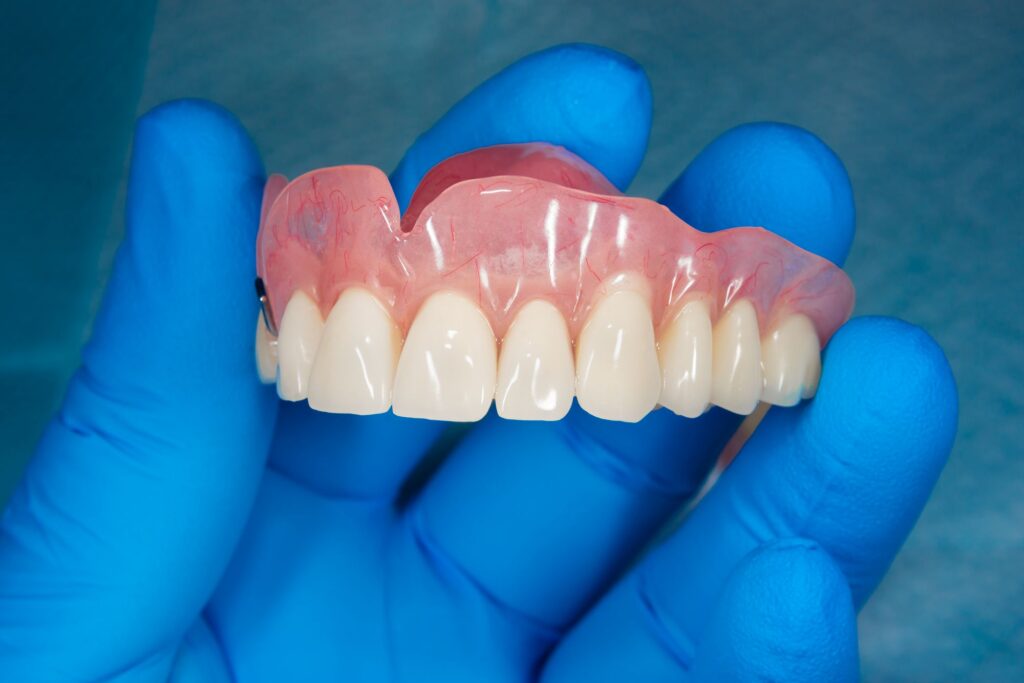
Dentures are the tried-and-true solution for tooth loss and are still an incredibly popular treatment because of their simplicity and versatility. Whether you’ve lost some or all of your natural teeth, your dentist can provide a lifelike restoration that simultaneously enhances your smile’s appearance and function.
But they only work as intended when they fit correctly, and unfortunately, tooth loss causes your jawbone to thin over time, which can destabilize or dislodge them. Continue reading to learn about 3 potential consequences of wearing ill-fitted dentures so you can better protect your dental health!
Concern #1: Soreness or Sensitivity
Your new teeth rely on a firm suction against the connective tissues over the bony ridges in your mouth to remain in place all day. But without roots in your jaw to stimulate new bone growth each time you bite down, it eventually thins, and your dentures can’t form a tight enough bond to stay put.
This can cause them to rub against your gums, causing soreness or sensitivity that makes it challenging to continue wearing them. If it hurts to insert your restoration, it may be a good time to contact your dentist to discuss relining or replacing it, which can improve its fit as well as your comfort.
Concern #2: Damaged Gums
Slippery dentures can also rub sore spots into your connective tissues, which can then form blisters or become infected. Not only can this be painful, but it can also increase the risk of developing additional oral issues, such as an infection or gum disease, that can further deteriorate your dental condition.
If your tissues feel tender, you can rinse your mouth gently with salt water to disinfect the area and provide some relief. You might also try over-the-counter pain medications, such as ibuprofen or acetaminophen, to reduce aches until you can have your dentures refitted.
Concern #3: Challenges Speaking
Under normal circumstances, wearing your dentures can improve your enunciation so that you can communicate more easily. However, if your tongue and lips are busy trying to hold them in place, you might struggle to speak clearly.
You might even develop temporary changes to your speech patterns, like a lisp or slur around particular sounds, like “sh” “th” or “v”, which might not improve until your dentures are repaired or replaced. Some patients also notice a clicking noise when they open or close their mouths to eat or speak, which can indicate that their prosthetics no longer fit and their mouth is trying to “kick them out”.
If you’re unsure whether it’s time to upgrade your dentures or consider a more reliable solution, such as dental implants, you can learn more by contacting your dentist for an appointment!
About the Practice
Patients at Brite Smiles benefit from two dentists with 20+ years of combined experience. Dr. Sival Patel, an accomplished general dentist, collaborates with Dr. Amir Danesh Sani, an award-winning periodontist, to offer a comprehensive menu of services, including dentures, to meet all your needs under one roof. They take the time to get to know your unique goals and concerns, then use state-of-the-art equipment to devise personalized treatment plans to address them. If you’re concerned about an ill-fitting restoration, you can request an appointment on the website or by calling (847) 297-0808.
