
Dentures – Des Plaines, IL
A Time-Tested Answer for Tooth Loss
When you have multiple teeth that need to be replaced, dentures likely come quickly to mind as a potential solution. These restorations have been around for centuries, and over time the techniques and materials used to make them have become more advanced. Today’s dentures are more lifelike than ever, and they’re designed to make it easier to speak and chew on a daily basis. Are you thinking you might be a candidate for dentures? Give our team at Brite Smiles a call today.
Why Choose Brite Smiles for Dentures?
- Lifelike, Long-Lasting Prosthetic Teeth
- In-House Dental Implant Placement
- Flexible Office Hours and Little Wait Time
Who's a Good Candidate for Dentures?

Regardless of how many teeth went missing, our team in Des Plaines can provide a lifelike set of dentures to help improve your smile’s function and appearance. However, that doesn’t automatically mean that this treatment is the right way to meet everyone’s unique needs.
Continue reading to learn more about who dentures can help and when they might be recommended to help determine whether one of these lifelike restorations is right for you!
Effects of Missing Teeth
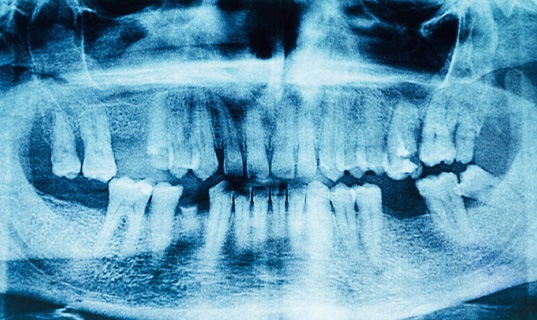
Would you be surprised to learn that advanced gum disease, or periodontitis, is the leading cause of permanent tooth loss? If bacteria in your mouth infect your connective tissues, they eventually start t recede to escape the disease, leaving the roots of your teeth with nothing to anchor them. But you might also lose them to severe decay or physical trauma.
Whatever the reason for the gaps in your grin, they can significantly detract from your daily quality of life. For example, you might struggle to eat or speak normally or to accept the sudden changes to your appearance.
What Qualifies You for Dentures?

Dentures can be a convenient and effective way to replace some or all of your missing teeth, but before proceeding, you must schedule a consultation with our team so we can determine whether you’re a good candidate.
For example, these restorations rely on a tight suction against your gums to remain in place, so you must have sufficiently healthy tissues. Some patients might require preliminary treatments, such as gum disease therapy, for dentures to be successful. Others might need to have any remaining teeth extracted so their prosthetics can fit and function correctly. Our team will examine your dental condition and devise a personalized treatment plan based on our findings.
Alternative Tooth-Replacement Options
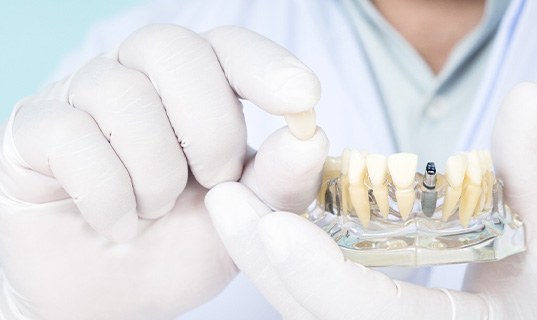
If we find that dentures aren’t right for you, don’t lose hope! We also offer additional services to restore your smile, including:
- Dental bridges. These oral appliances are ideal for rebuilding one to four consecutively missing teeth, and are usually made from durable, customizable ceramic. They contain the necessary number of artificial teeth positioned between two dental crowns that anchor to healthy abutment teeth or implants on either side of the wider space in your smile.
- Dental implants. This is the only option that is surgically placed in your jaw and eventually fuses with the bone to become a more permanent part of your mouth. These can anchor different restorations, such as a crown, bridge, or dentures, depending on the number of missing teeth. Our team has the experience and state-of-the-art technology to perform the entire procedure in the office.
Types of Dentures
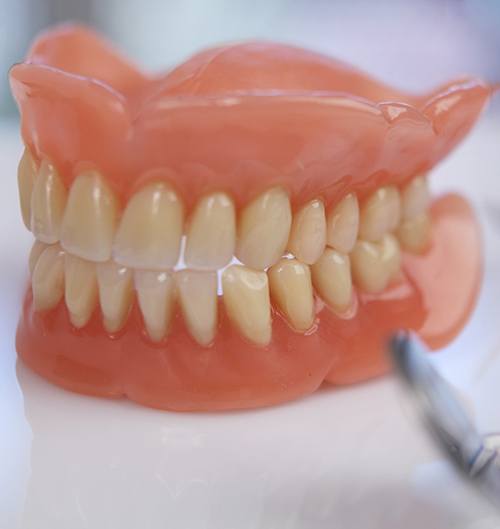
Getting dentures doesn’t have to mean just one thing; there are different types to consider. We’ll recommend the kind of denture that we feel is best suited to helping your smile function properly again; an estimate of the overall cost will be provided at your initial consultation.
Partial Dentures
If only some of your teeth are missing, you may receive what is known as a partial denture. This type of restoration will be expertly made to fit seamlessly into the various gaps throughout your grin. Your partial denture will use a clasp to stay attached to your natural teeth.
Full Dentures
An entire arch of teeth can be replaced with full dentures. The gum-colored base of the restoration will stay in place thanks to naturally-created suction. Remember that you’ll need to take your dentures out before bed to give your gums a chance to rest while you sleep.
Implant Dentures
A traditional denture can only replace the crowns of your teeth (as in, the parts that everyone can see when you show off your grin). Implant dentures are different in that they can restore the root structure of missing teeth as well. We highly recommend implant dentures for anyone who wants new teeth that look, feel, and function as close to their original smile as possible.
The Benefits of Dentures

The decision to get dentures is a big one, so it’s important to take the time to consider all of the advantages of the treatment. During your consultation, we will discuss each of them in depth to help you decide if this is the ideal tooth-replacement solution for you. In the meantime, however, you can read on to learn just a few of the reasons why dentures are an excellent choice:
Lifelike Look and Feel

Oftentimes, patients assume that dentures are bulky and obvious. However, everything from the gum-colored base to the replacement teeth is crafted from only the best materials. Plus, your restoration will be custom-made to ensure that it suits your face shape, dental needs, and aesthetic goals. All that to say, choosing this tried-and-true solution can help you feel more confident about the way your smile looks.
Restored Bite Strength

Like many other patients, you may have resorted to eating plain yogurt, applesauce, and other extremely soft foods following tooth loss. Not only can this be quite boring, but it can also make it difficult to get the vitamins, minerals, and nutrients that your body needs. With dentures, we can fill the open spaces or give you an entire arch of teeth, allowing you to chew comfortably and enjoy a variety of foods.
Easy Maintenance

Dentures can last for 10 years with proper care. Don’t worry – that doesn’t require expensive products or a cumbersome regimen. Just use a soft-bristle toothbrush and mild dishwashing liquid to gently remove food particles, plaque, and other debris from the surface after each meal. Then, place them in a glass filled with water or a dentist-approved cleaning solution before you go to sleep.
Clearer Communication

To form words, your tongue makes a series of distinct motions against the back of your teeth. So, you can see why your speaking patterns change if you are missing one, a few, or an entire arch! The good news is that we can give you a complete row of teeth again with partial or full dentures. Once you’re used to them, you’ll be able to enunciate clearly again.
Prevents Dental Drift

Even just one missing tooth can cause the surrounding teeth to shift, negatively impacting the alignment of your bite. This phenomenon is known as dental drift, and it can lead to several issues, including premature wear on your teeth. That’s why we recommend exploring the different tooth-replacement solutions that are available at our office, like dentures!
Cost-Effective

Another noteworthy benefit of dentures: they are cost-effective, especially when it comes to replacing a large number of missing teeth. So, if you are ready to face tooth loss head-on, but you’re a bit worried about the price, don’t hesitate to schedule a consultation with our team at Brite Smiles! We’d be happy to provide you with an estimate of the cost, discuss the financial solutions that are available, and answer any questions that you have.
Understanding the Cost of Dentures

Replacing your missing teeth is a worthwhile investment you will not regret. However, before you move forward with treatment, it’s normal to ask about the cost of dentures. Knowing how much you can budget for out-of-pocket expenses is essential; it’s why your dentist will ensure you understand what to expect when discussing the financial obligations associated with treatment. From determining how much your dental insurance will cover to how you can take advantage of additional payment options, we’ll help you achieve a complete smile affordably.
Factors That Affect the Cost of Dentures
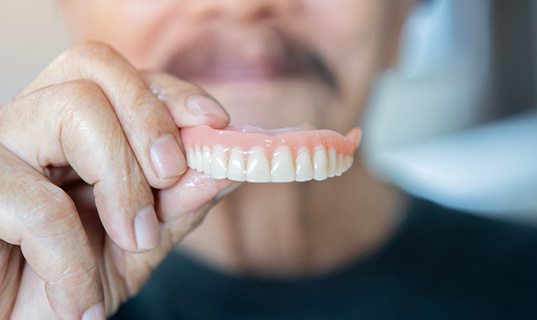
The cost of dentures depends on several factors that your dentist will consider when evaluating your smile and proposed tooth replacement. They include:
- How many teeth you are missing
- The materials used to create your dentures
- The type of denture you require (full, partial, or implant)
- If you need additional pre-treatment to address existing gum disease, severe tooth decay, etc.
Are Implant Dentures More Expensive?
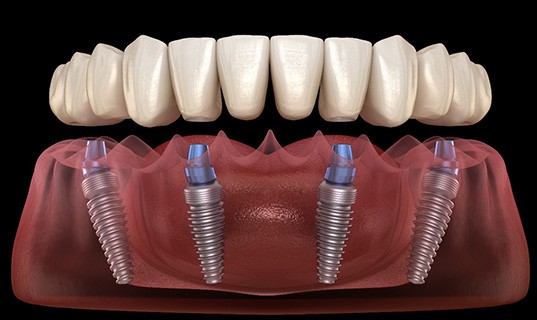
Yes, implant dentures are more expensive than their traditional counterparts; however, many patients believe they are worth the added investment. Unlike regular dentures that only attach with natural suction or metal clasps, implant dentures are secured to titanium implant posts that are positioned within the jawbone. This creates a permanent fixture that can potentially last a lifetime. Although the top restoration will need to be replaced over the years, the foundation or base can remain in place and withstand daily wear and tear for decades.
Does Dental Insurance Cover Dentures?

In most cases, yes, dental insurance companies offer some form of coverage for dentures. Generally, it is between 50% and 80% for these prosthetics. This makes dentures an affordable option for patients who need help addressing their tooth loss. If you’re unsure how much your insurance company will cover, don’t hesitate to ask a member of our team. We’ll be happy to work with the insurance company on your behalf, so you pay less on your bill.
Other Options for Making Dentures Affordable

Brite Smiles is pleased to offer alternative payment options for your dentures, making them more affordable. We offer flexible Cherry financing that lets you pay your bill over time instead of paying up front. With countless plans to choose from, many with low or no interest included, you can budget your care with less worry.
We also offer an in-house dental plan that lets you pay a single low fee in exchange for preventive treatment and discounts on other services. Our adult wellness plan offers a 20% discount for restorative procedures and has no waiting periods, deductibles, or annual maximums.
Dentures FAQs
Will My Dentures Look Like My Natural Teeth?
Today's dentures look better than ever and are highly lifelike! Modern materials and fabrication techniques allow for dentures that closely mimic the appearance of natural teeth, including realistic color, translucency, and shape. In fact, many patients are pleasantly surprised by how natural their smile looks in the mirror. When you come into our Des Plaines office for dentures, our team will take into account your facial structure, skin tone, and personal preferences, so that your new smile feels authentically yours.
Will I Be Able to Eat Normally with Dentures?
Many patients with missing teeth who wear dentures are able to enjoy a varied diet with most of their favorite foods, although some adjustments are necessary, especially in the beginning. Starting with softer foods that require little chewing and cutting your food into smaller, bite-sized pieces helps you build confidence and lets your mouth adjust to the new prosthetic. However, extremely hard, sticky, or chewy foods, such as hard candies, tough cuts of meat, or items like caramel, can dislodge or damage dentures and are best avoided or approached with extreme caution.
How Long Will My Dentures Last?
With proper care, dentures can last anywhere from 5 to 10 years, though this greatly varies depending on the materials used and how well they are maintained. Ensuring that you inspect and clean them every day and keep up with your oral hygiene goes a long way toward improving their lifespan. It’s also important to note that over time, the shape of your jawbone and gum tissue naturally changes, which can cause dentures to fit less securely even if the dentures themselves are in good condition.
Will My Dentures Affect the Way I Speak?
It's not uncommon to notice some changes in your speech when you first start wearing dentures, particularly with certain sounds and words (like “s” or sh” sounds). Most patients find that this adjustment period is temporary, and within a few weeks, the muscles of your tongue, lips, and cheeks adapt, and speech returns to normal. Practicing speaking with a trusted family member or friend, reading aloud, and speaking slowly at first can all help speed up the process.
Do I Still Need to Visit the Dentist If I Have Dentures?
Even for patients who wear dentures, regular biannual dental visits remain an important part of maintaining excellent oral health! At these appointments, our team will examine your gum tissue, remaining teeth (if you have any), and check the fit and condition of your dentures. The shape of your jaw changes gradually over time, and keeping up with routine visits allows us to catch issues early before they become uncomfortable problems—for you or your dentures.


